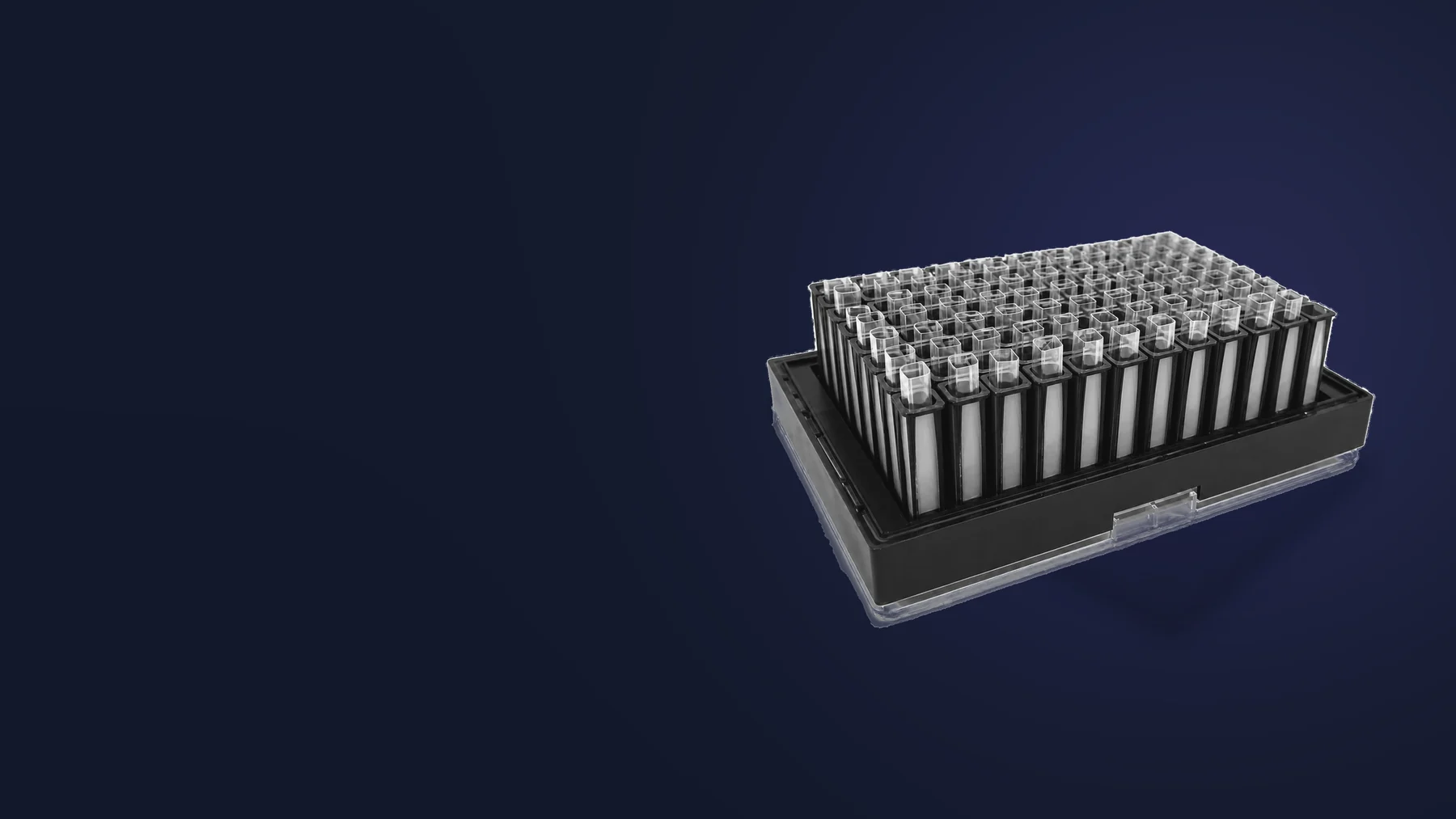
High-throughput dialysis and sample processing
High-throughput dialysis and automated sample processing
Cresivis develops a parallel processing platform for microsample dialysis, buffer exchange, and process-condition screening. Built around familiar 96-well workflows, it helps R&D teams move from one-tube operations to validated, repeatable plate-based processes.
Platform focus
Designed around real laboratory workflows—from dialysis architecture and handling to application validation.
Parallel processing
Dialysis and sample-processing units built around a 96-well interface for simultaneous evaluation of multiple samples and conditions.
Lab-friendly workflow
Open loading, sampling, and plate-array conventions reduce the transition cost from familiar pipetting workflows.
Configurable validation
Architecture and application testing are configured around sample volume, membrane specification, dialysis conditions, and analytical endpoints.
Featured product
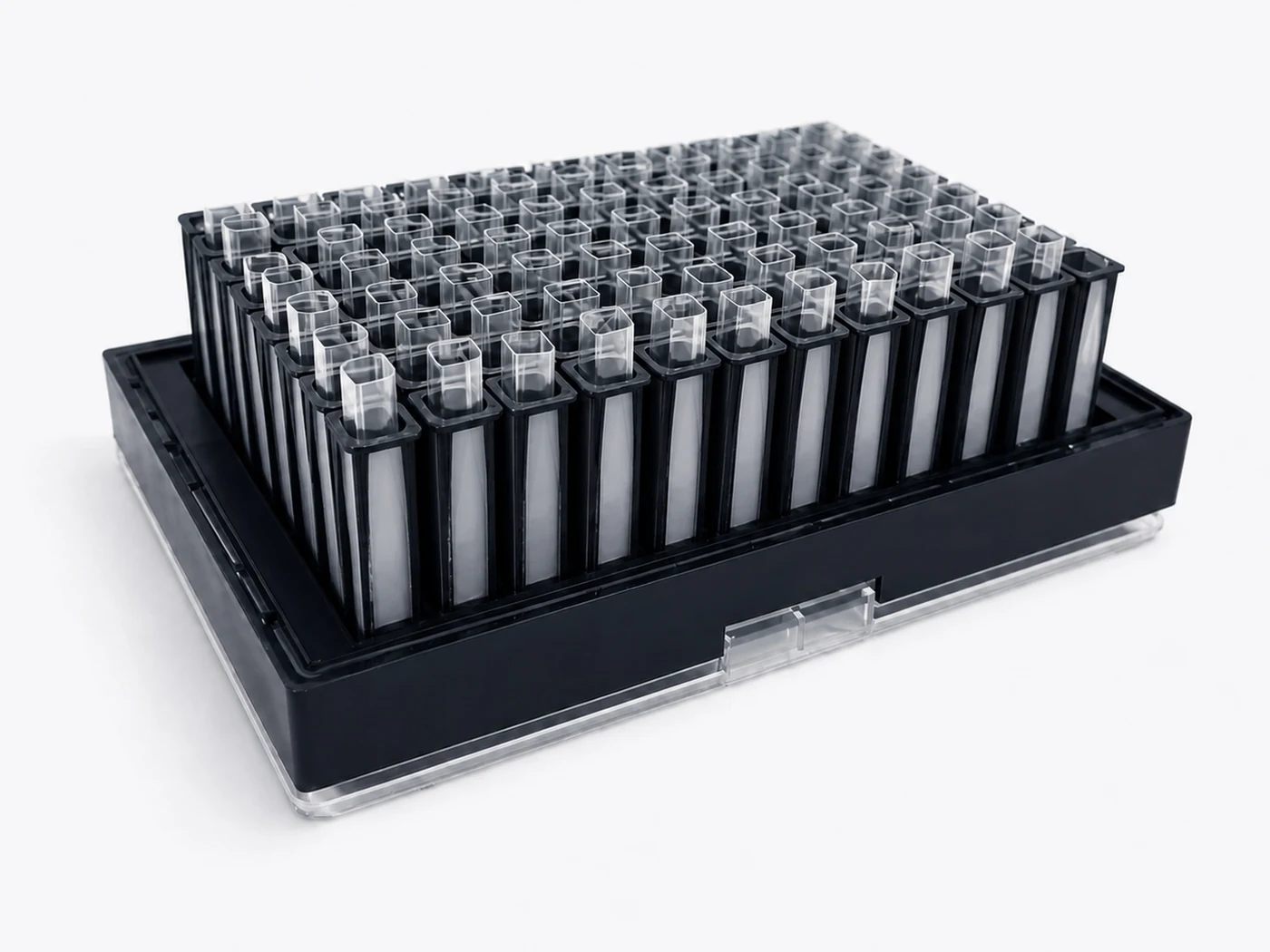
96-well parallel dialysis plate
Open wells on top are loaded and sampled exactly like an ordinary 96-well plate, while an independent regenerated-cellulose tubular membrane beneath each well immerses its active section in the dialysate. Fluid paths are isolated well to well, with CV < 5% across an overnight dialysis. A 25 mm membrane gives 50–250 μL per well; 35 mm gives 50–400 μL.
- Ethanol removal and buffer exchange for LNP and nucleic-acid delivery systems
- Desalting and buffer exchange for proteins, peptides, and low-volume biological samples
- Parallel process development and method comparison across formulations and conditions
- Localized alternatives to imported microdialysis plates with application-specific validation
Collaboration
Start with the application goal, then define the architecture, materials, and validation boundaries.
Define sample volume, target removals, and recovery requirements
Select the model, MWCO, membrane length, companion container, and dialysate conditions
Run recovery and leakage pilots, review the data, and confirm the specification